
May 01 2010

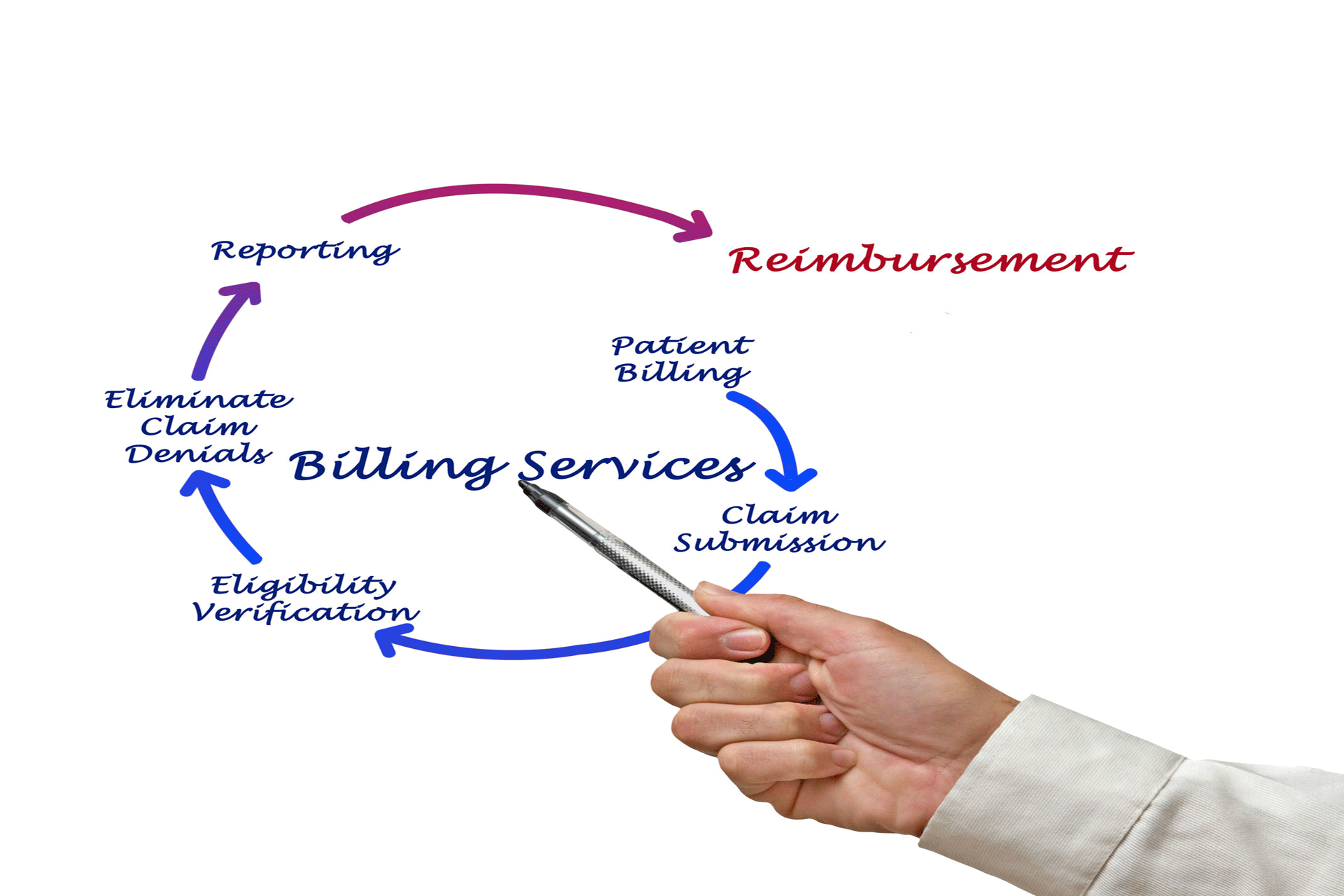
Selecting a Medical Billing Service

Software Advice recently penned a post, “Should You Outsource Your Medical Billing,” which we blogged about recently. They have a follow up article on selecting a medical billing service which we also wanted to mention.

The first article compared outsourcing the revenue cycle management process to managing that function in-house with medical billing systems.  Assuming you go for the former option – outsourcing – this post will help you make the right choice of medical billing service companies.

How can a provider tell the difference between a fly-by-night medical billing company and one to which they can hand over their patient’s medical information with confidence? If a physician knows what criteria by which to judge a medical billing service, they’ll be able to select a company that will significantly decrease their time spent on billing issues and increase their time spent on patient care.

To choose correctly, a provider will need to evaluate these five key criteria when choosing a medical billing company:

  • Level of service;
  • Industry experience;
  • Use of technology;
  • Pricing model; and,
  • Capacity to take on new clients.

You can read the full article here.

Share and Enjoy:
  • Digg
  • del.icio.us
  • ThisNext
  • Furl
  • Reddit
  • StumbleUpon
  • Technorati

No responses yet

Mar 26 2010

Great Article on Medical Billing

This past week, Chris Thorman of Software Advice sent me this great article on whether or not a practice should outsource their billing to a medical billing service.

In the article, both the in-house approach and the outsourced approach are compared in terms of costs and convenience for the provider. The results? The outsourced approach came out on top in terms of generating a higher net revenue for a practice but Chris had a point I agreed with wholeheartedly:

It’s important to note that a medical billing service isn’t a silver bullet for in-house billing issues. Billing services can vary widely in their efficiency and accuracy when processing claims. If a provider chooses a billing service that is lax and prone to errors, the headaches surrounding billing issues won’t get better – they’ll get worse.

The percentage of the billed amount a billing service can collect is the major difference between different third party billing services and doing your billing in-house.

Chris also went over a few of the reasons that a provider may be motived to outsource their billing:
• The provider is new to running a practice;
• The practice has high staff turnover;
• The provider isn’t tech savvy; or
• The provider simply isn’t focused on the business side of his practice.

For more information on medical billing, take a look at Preferred Health Resource’s medical billing service page.

Share and Enjoy:
  • Digg
  • del.icio.us
  • ThisNext
  • Furl
  • Reddit
  • StumbleUpon
  • Technorati

One response so far

Feb 20 2010

Meaningful Use - The Other Shoe Needs to Drop

The Office of the National Coordinator for Health Information Technology (ONC) and the Centers for Medicare & Medicaid Services (CMS) released documents detailing what physicians and hospitals must do to qualify for (EHR) incentive payments under the HITECH Act.  To qualify for incentives, physicians and hospitals must be using “certified EHR technology” in a “meaningful manner.”  These documents were released on December 30, 2009, one day before they would officially be considered late.

These documents provide a list of features physicians and hospitals need to have included  in their EHR technology and how these features are to used to meet the definition of meaningful use during the 2011 EHR adoption period.

There’s only one minor problem, there are no qualified organizations that can certify that your EMR is up to stuff including CCHIT.  That’s supposed to come later this year.  Instead of getting all puffed up about this I would say that the standard will have to be slimmed down and/or delayed, stay tuned.

Share and Enjoy:
  • Digg
  • del.icio.us
  • ThisNext
  • Furl
  • Reddit
  • StumbleUpon
  • Technorati

2 responses so far

Aug 09 2009

New York LASEK - Go For It

Since I was in fourth grade I’ve had glasses, it general has never bothered me. When I hit my 40’s I had adjust because I had problems reading so my prescription lens became progressive lens. I never ever was tempted to switch to contact lens, seemed like much to much work and when people had problems it didn’t seem like it was worth it. So I’ve veen wearing eyeglasses for almost half a century!

But a couple of months ago I started to talk to a local New York LASEK service and it seemed like a solution because it deals with both near and far sightedness.  But even with this total solution for my eyesight that’s not what got me to decide. It was conversation with two very rational people not prone to exaggeration. These are people have measured responses to most questions you would ask them and they BOTH used the phrase “It changed my life”.

So I am excited about the LASEK and will be reporting on my progress from both a personal and healthcare IT prespective.

Share and Enjoy:
  • Digg
  • del.icio.us
  • ThisNext
  • Furl
  • Reddit
  • StumbleUpon
  • Technorati

No responses yet

Jun 08 2009

Meaningful Use of Electronic Medical Records

The Office of the National Coordinator for Health Information Technology (ONCHIT) will soon release a description of the “meaningful use” of electronic medical records (EMR). Until HHS releases what it will require for a EHR user to receive the EHR stimulus money, then it’s anybody’s guess just what the heck meaningful use of an EHR actually means, please forgive the pun ;-)

I can think of a number of factors that may or may not be part of this aspect of the standard:

  • The number of years the practice has used the system within the practice.  Part of the way the money is being passed out is to encourage early adopters, they actual get a bigger incentive to convert to an EMR.
  • Does the data on the system get passed to other systems.  In other words, is the data transparent and can other systems export and import the demographic and clinical information.  A simple example is placing a lab test and recieving the results back into the EMR.
  • Does the system improve the quality of care.  Well duh, but I bet this is the hardest part to quantify but isn’t this the most important factor.

But as I’ve read the healthcare blogs I’ve seen another thought about meaningful use.  The concept evolves around that concept that “meaningful use” should somehow measure if the user(s) is/are move effective in their practive of medicine with the system.  From a productivity vantage key to measure this would be great but even more difficult to define.

Share and Enjoy:
  • Digg
  • del.icio.us
  • ThisNext
  • Furl
  • Reddit
  • StumbleUpon
  • Technorati

No responses yet

Mar 31 2009

EMR Usability missing ingredient in CCHIT Evaluation

In today’s ModernHealthcare.com there’s an article on EMR Usablity and CCHIT Evaluation.  The main point is simple, make the user friendly aspect of an EMR part of the certification process.   I am in total agreement, most EMR may pass the “mechanical” aspects of interoperability but are hard to use.

The stimulus act ignores the brutal  fact that traditional EHR systems will NOT solve much of the healthcare industry’s woes if doctors can’t or won’t use them. The incentives assume that “if you fund it they will come” this just isn’t the case.   I love this remark in the article “Based on the “success” of EHR systems over the past 10 years, this bet could be akin to AIG’s bets on credit default swaps.”

Here’s the problem with usability, much of this is in the eyes of the beholder.  Its not just a matter of how many clicks a task takes.  I agree with the sentiment of the author but this is a very subjective issue, classic apples and oranges.

Share and Enjoy:
  • Digg
  • del.icio.us
  • ThisNext
  • Furl
  • Reddit
  • StumbleUpon
  • Technorati

6 responses so far

Sep 17 2008

You say Potato - Uncle Sam says EHR, EMR and PHR

According to the  people at Software Advice earlier this year the NAHIT established definitions for EHR, EMR and PHR. Given their authority, and the Bush administration’s plan to build an interoperable health IT infrastructure, EHR has become the standard phrase to describe an electronic patient chart. However, the majority of physicians are still searching for an EMR, and software vendors haven’t renamed their products.

Software Advise wrote their article EHR vs EMR - What’s the Difference? to explain the difference between the two systems and help physicians understand what role the acronym should have in their purchase.

I don’t remember seeing this on any of the regular IT healthcare blogs but it’s really mute.  EMR is going to stick for sometime and I wonder if NAHIT only made things more complex by trying to pigeon-hole the definitions.

Share and Enjoy:
  • Digg
  • del.icio.us
  • ThisNext
  • Furl
  • Reddit
  • StumbleUpon
  • Technorati

3 responses so far

Jun 21 2008

Google Health - Part 3

I heard from Google regarding the Aspirin vs. Plavix issue.  If you put in the full dose aspirin then the warning does show up.  As I said on the Google forum this is incorrect but I am not going to split hairs here this is not medical advise.

On to the next step, as it were.  I went to my pharmacy, which in my case is Target.  I decided to ask my pharmacist to get help to get my data into my Google Health record.

I just love what happened.  My pharmacist is a very careful person.  When I pickup medication for other members of my family she will often not discuss the other person’s health issues with me, this is as it should be.  I love picking up my daughter’s birth control medication, its like talking to a monk who’s taken a vow of silence.

I explained to the pharmacist that about Google Health and how I want to get Target’s cooperation in importing the prescription data into the PHR.  The reaction from the pharmacist was and I quote “Isn’t this against HIPAA regulations?”  I had to laugh, she knows that I am in the health care field and I explained that it was not.  She managed to get me the name of the manager further up the food chain in the pharmacy division.

So I make the calls and basically they had no interest in doing this.  Their first problem is that they don’t control the data, its a third party ISP.  They were willing to get me the name of the company but I don’t think I’ll have much luck as a single consumer.

I am going to switch gears and see if I can talk to my doctors and/or hospitals and see if I have any better luck.

Share and Enjoy:
  • Digg
  • del.icio.us
  • ThisNext
  • Furl
  • Reddit
  • StumbleUpon
  • Technorati

6 responses so far

May 29 2008

Google Health - Part 2

So I loaded up all my medications with the correct dosage information. Next I went to the drug interaction tab and I came up with no interactions. Am I doing something wrong because I know that Plavix and Aspirin can interact. They even say so in the Bristol-Myers Squibb Plavix TV commercial
Here’s the Google Health Screen shot:

Google Health - Drug Interaction

This is an unhappy set of events. If I go to regular Google search I am presented with an number of regular news sources but also links that are ambulance chasers.

Here’s a CNN link from the first page of the SERPs:

http://www.cnn.com/HEALTH/library/DI/00060.html

The Plavix and Aspirin combination can represent a problem but I would rather risk the occasional nose bleed then another coronary incident.

This section needs work.

Regards,
Jordan Glogau

Share and Enjoy:
  • Digg
  • del.icio.us
  • ThisNext
  • Furl
  • Reddit
  • StumbleUpon
  • Technorati

No responses yet

May 26 2008

Google Health - Part 1

Now that Google Health is live I decided to give it a spin. As I said in a earlier post I don’t think much of these efforts but Google is a big name and maybe that alone will get PHR’s in the public eye. Well, its worth a try. I have used other PHR systems but I am going to approach this from scratch. I will try to keep track of my time and comment on the interface. I won’t do this all at once so it will be a number of posts. I will try to include screen grabs when I can .

Further, when I think I need data from other health organizations I will try to contact them and see if they want to join the party. Let’s see how deep the PHR rabbit hole really is!

So lets get started. I’ve decided to go right to medications. I am doing this because this is where my main concern is, drug interaction. I take a number of medications and I know that there is a risk because of the blood thinner that I take.

The first issue is, do you have the medications handy, or do you have a list that you keep with you. I have the latter, a list from my wallet.

Here’s the screen when your trying to pick out your medications.

Medication Capture Google Health

OK, if you don’t have this list you’re lost. The real disappointment came when I finished putting in all my medications. Then I went to the Drug Interaction section. When I went there I go zero results. So I went back and only then did I realize that I need to enter the drug dosage information. Why is this a separate step, in AllScript you don’t have this separated.

Medication Dosage - Google Health

So we have to go back and enter our dosage information. If you going to separate the two steps you need to inform users that all details are needed to get the interaction advice.

A small annoyance, there are an add and edit link for each medication. After trying the add button I realized it there if you take combinations of the same drug. How hard is it to explain this in plain English. I added a record and then had to delete it and “edit” it in the right place.

Medication Add or Edit - Google Health

This could be tough, but some medicines come in multiple doses and you may take a combination of two dosage levels. Maybe just label it as dosage 1, dosage 2.

OK, now I’ve entered all my medications. At this point I am ready to see the results of the Drug Interaction. I will cover this in Part 2. In the meantime I will talk to my pharmacy, Target, and see if they are going to work with Google Health. I know I have other medications that are not active that they have in their database. This should be interesting.

Share and Enjoy:
  • Digg
  • del.icio.us
  • ThisNext
  • Furl
  • Reddit
  • StumbleUpon
  • Technorati

2 responses so far

Next »